

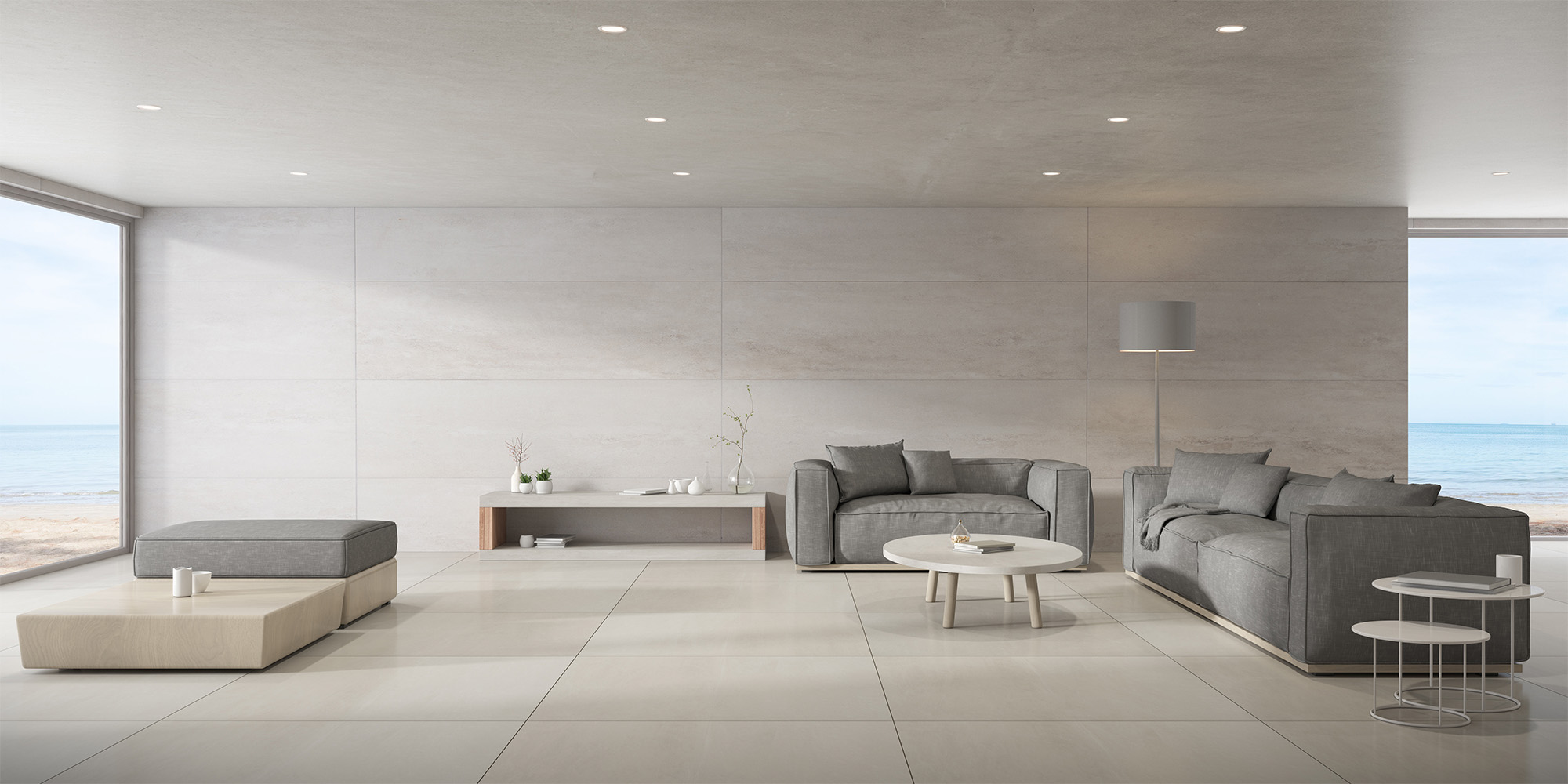
Tile flooring gives you plenty of flexibility, but size can have a surprising effect on the finished look, installation process, and day-to-day maintenance. Large-format tiles have become especially popular in 2026 because their expansive surfaces create a clean, contemporary appearance with fewer grout lines.
Standard tile remains a practical choice, though, particularly when you want more layout flexibility or are working around smaller spaces and complex room shapes. Understanding the differences before choosing your tile can help you balance appearance, installation requirements, maintenance, and budget.
Large-Format Tiles Create a Clean, Continuous Look
Large-format tiles are generally much bigger than traditional tile sizes, allowing more of the surface to read as one continuous plane. With fewer grout joints, they can make kitchens, bathrooms, entryways, and other areas feel more open and visually streamlined.
That minimal appearance is one reason large-format tiles fit naturally with several tile flooring trends 2026 homeowners are considering. Oversized surfaces work particularly well with contemporary and transitional interiors, where simpler lines and fewer visual interruptions can complement cabinetry, countertops, and fixtures.
There is a practical benefit, too. Fewer grout lines mean fewer areas where dirt and residue can collect. However, large tiles are not automatically easier to install. Their size and weight require careful handling, accurate preparation, and attention to the underlying surface.
Standard Tile Offers More Layout Flexibility
Standard tile continues to earn its place because it can adapt to a wider range of rooms and design styles. Smaller formats are easier to arrange around corners, doorways, niches, plumbing penetrations, and other obstacles. They can also give you more opportunities to create patterns such as grids, running bonds, or decorative layouts.
For homeowners who prefer a more traditional look, standard tile can add visual detail without requiring a particularly elaborate material. Smaller tiles can also be useful when the room itself is compact, since the proportions may feel more natural than oversized pieces.
During tile installation, standard sizes can sometimes be easier to handle and position. That does not mean installation is automatically simple, though. Proper subfloor preparation, spacing, alignment, and setting techniques still matter for a durable, professional result.
Compare Installation Requirements Before Choosing
The difference between large-format tiles and standard tile is not simply aesthetic. Installation conditions can influence which option makes sense for your project. Large pieces need a sufficiently flat substrate because uneven areas are more noticeable across a larger tile. Handling the material may also require additional care, especially with very large or heavy pieces. A professional installer can evaluate the surface, plan the layout, account for movement and transitions, and reduce the risk of lippage or cracking.
Standard tiles have their own installation considerations, including grout spacing and layout planning. The smaller size may make certain cuts and adjustments easier, but a high-quality installation still depends on careful preparation. Before selecting a tile, consider the condition of the existing surface, the room dimensions, transitions into adjacent spaces, and how the finished floor will be used.
Think About Maintenance, Style, and the Room Itself
Your preferred look should work with the practical demands of the space. Large-format tile can create a sophisticated, uncluttered appearance, while standard tile may provide more texture and pattern. Grout color matters with either choice. A contrasting grout can emphasize the tile layout, while a closer color can create a more seamless appearance.
For busy kitchens and entry areas, maintenance should also be part of the decision rather than an afterthought. Local homes can have very different layouts, from compact spaces to open-concept renovations. That makes choosing tile based solely on a trend risky. The best flooring choice considers room size, traffic, furniture, adjoining materials, and the overall design.
Choose the Tile Format That Fits Your Project
There is no universal winner between large-format tiles and standard tile. Large pieces can deliver a sleek, spacious appearance and fewer grout lines, while standard sizes provide versatility and greater flexibility for detailed layouts. Your ideal choice depends on the room, surface conditions, design goals, and installation requirements.
If you are planning a project in Medford, MA, the right guidance can make the selection process much easier. Creative Design Interiors LLC can be part of that planning process, helping you think through materials and how they fit into the larger design. When you are ready to compare options in person, visit our showroom and bring your ideas, measurements, or inspiration. For homeowners throughout Boston, Northshore, Medford, Melrose, and Cambridge, MA, contact us today to start narrowing down the tile flooring options that make sense for your space.


